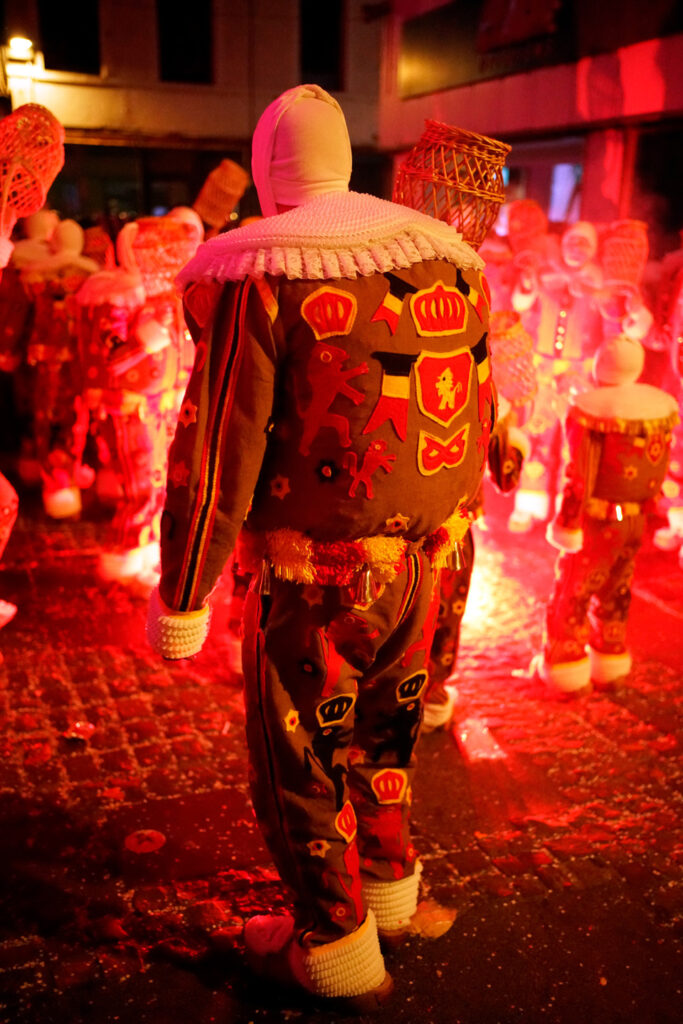
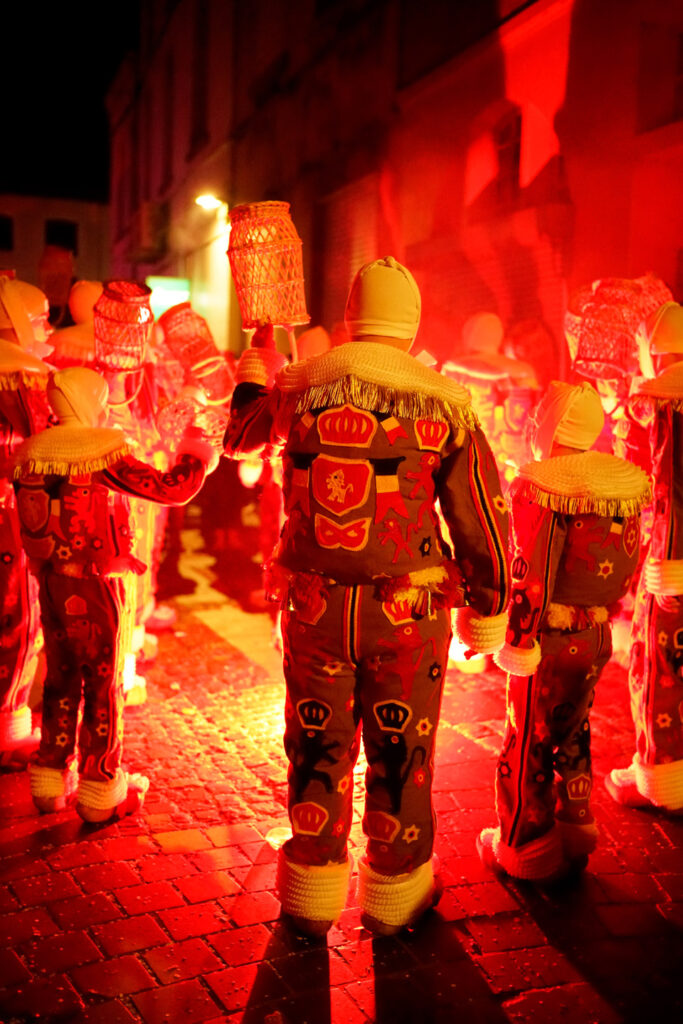
After two years without celebrating the Carnival due to the COVID-19 pandemic, the city and the region were eagerly looking forward to holding it again in February 2023. It was my first time, but I was prepared. For months, every Sunday afternoon, the various brotherhoods of Gilles gathered for what are called soumonces, preparing for what was to come to the rhythm of their drums.
On the morning of Mardi Gras, around 4 a.m., the first drums began to sound. The big day of the Carnival had begun. I am not an expert on the Carnival, nor did any local ever explain to me in detail how the celebration worked, but I was able to observe how the Gilles go from house to house, picking up others, and how as more and more Gilles and their families gather, the noise grows louder. No Gil can walk the streets without a drummer, and they generally march to the rhythm of the music in their wooden clogs.
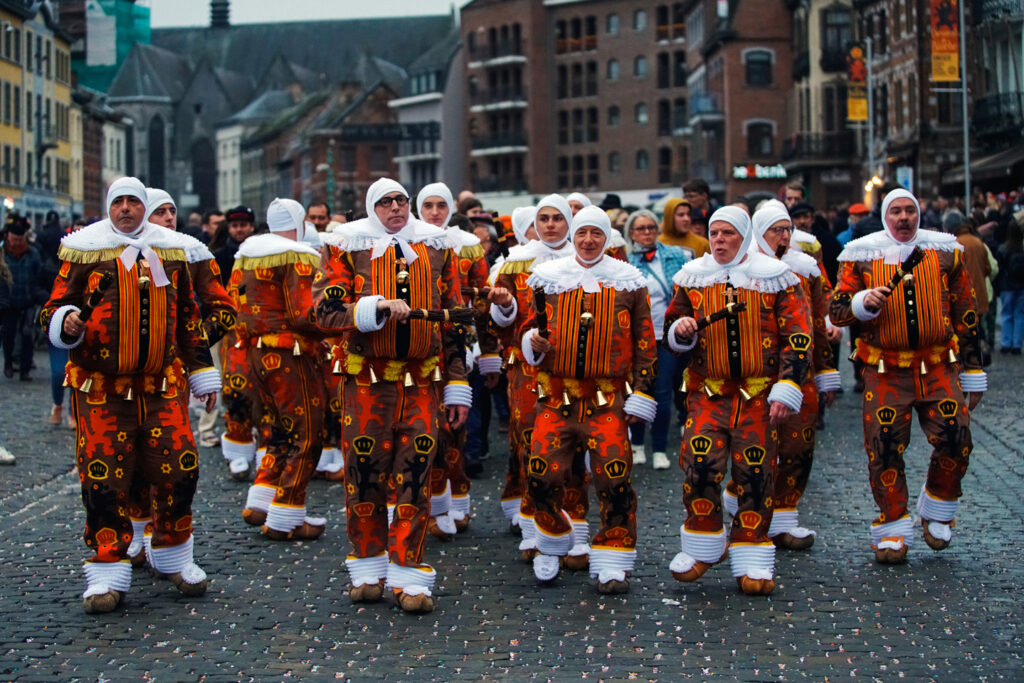
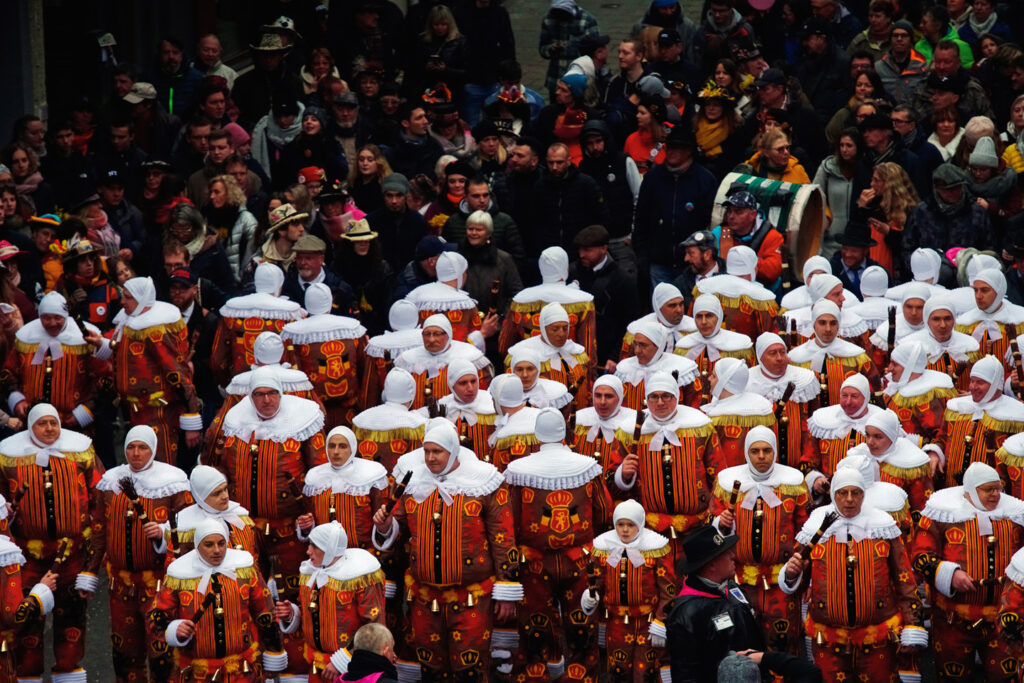
I woke up, with my equipment ready from the night before, and went out into the street to experience this incredible event for the first time. During the early morning hours, groups of Gilles formed and walked through the entire town in a kind of controlled chaos, eventually all heading to the Grand-Place, where they waited to enter the city hall, each brotherhood separately, to be recognized by the mayor. While one brotherhood waited for its turn, they formed a circle, which, depending on the number of members, could take up much of the square, and moved in a ring to the rhythm of the drums.
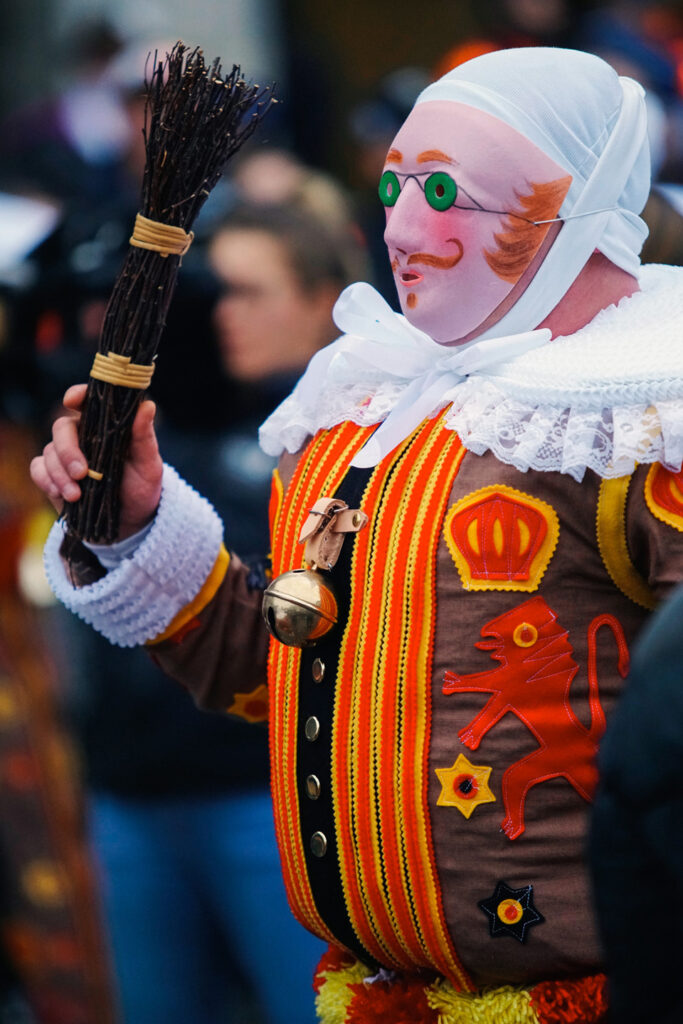
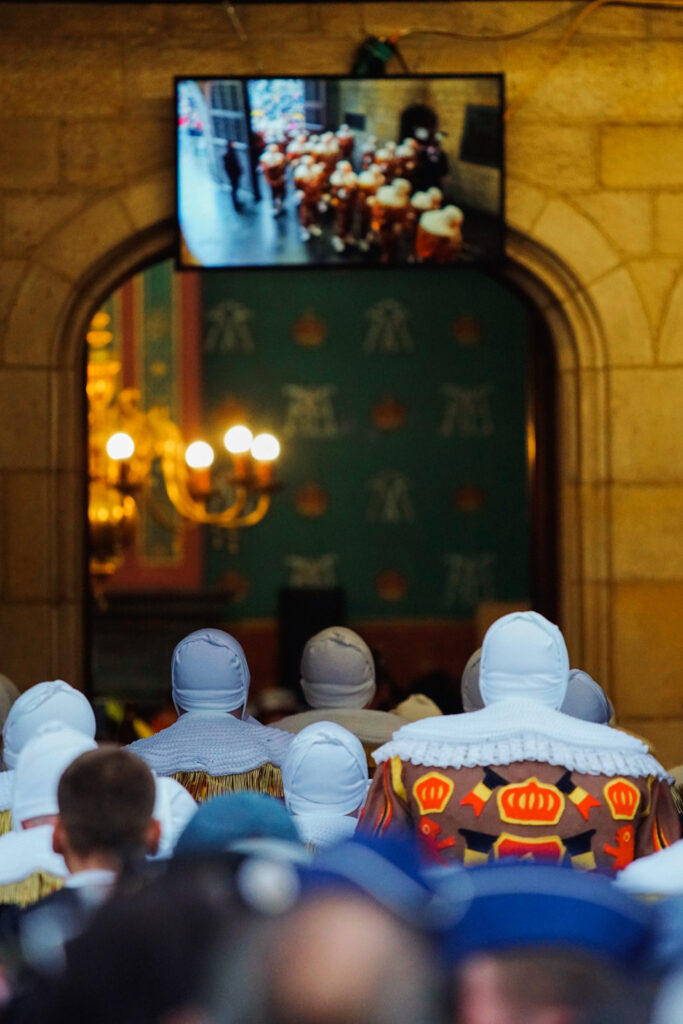
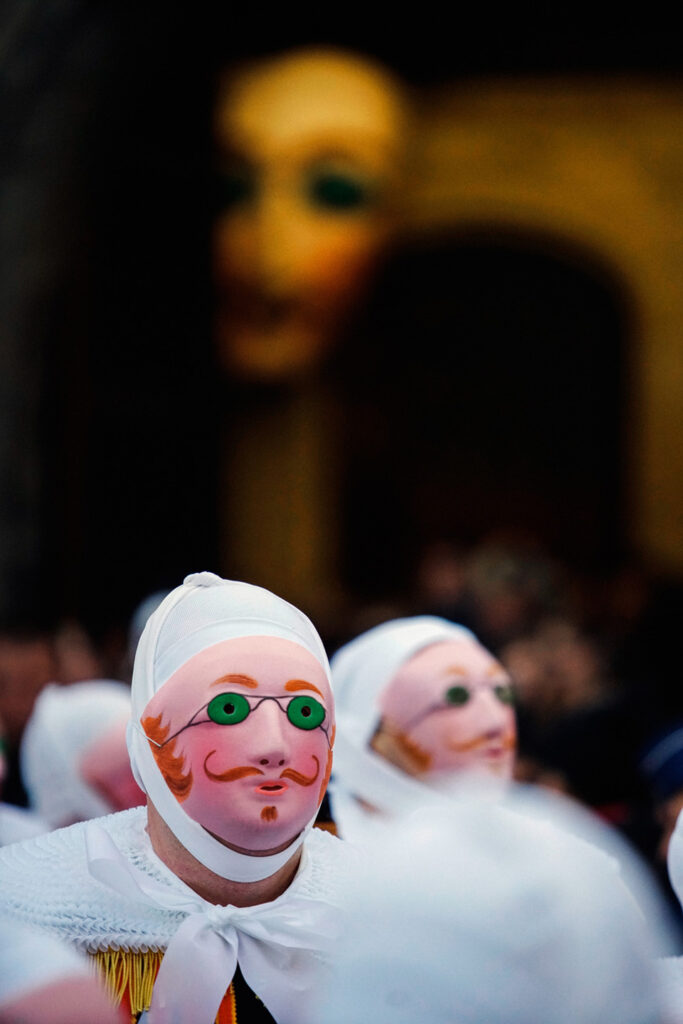
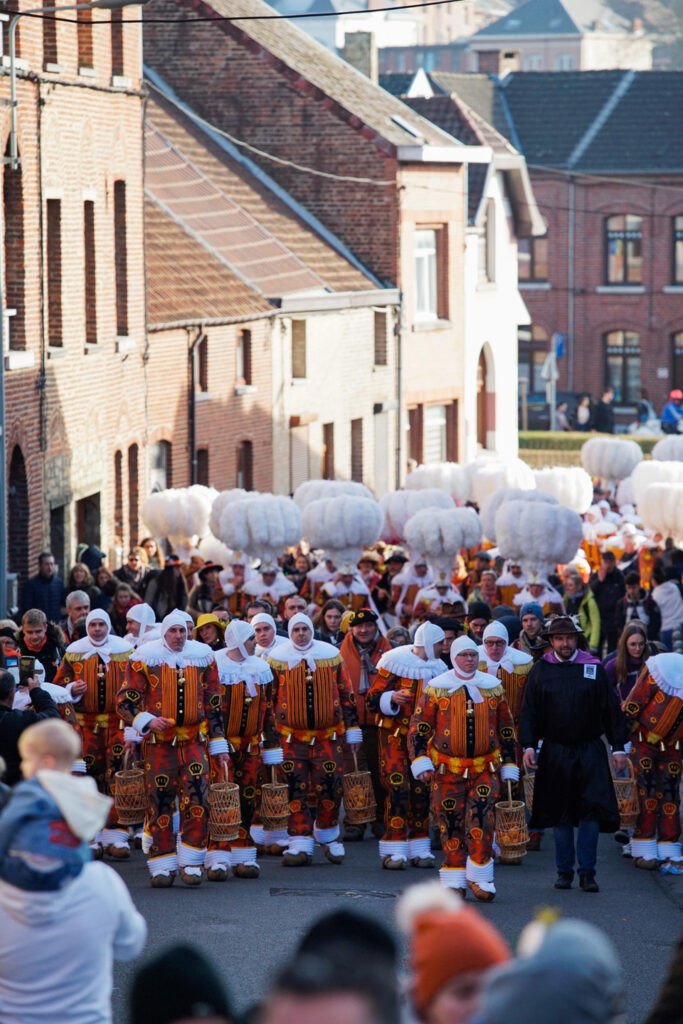
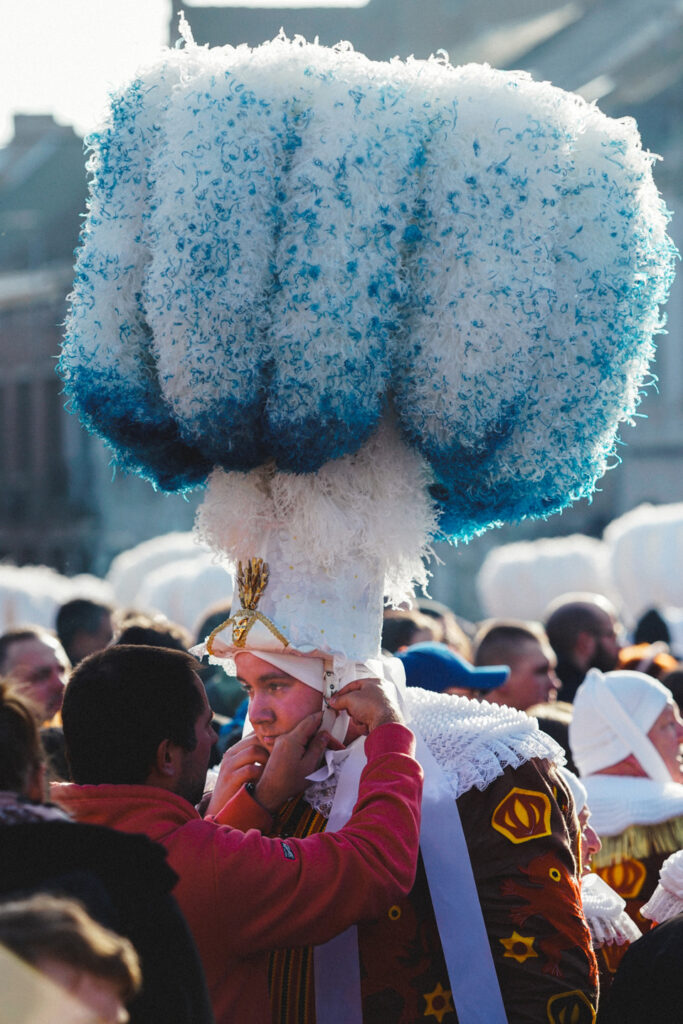
Later, in what the French-speaking world calls l’après-midi (the afternoon), all the brotherhoods, each with its own band, now including more instruments than just drums, gathered at the beginning of Avenue Charles Deliège to parade to the Grand-Place. It is a seemingly short route, but one that takes a long time. This is the moment when, finally, some Gilles take out their magnificent hats made of ostrich feathers. They say wearing one is a pride and a sign of having had a good year financially, as renting them is expensive. Among drums, wind instruments, and hats, the Gilles carry baskets full of blood oranges, which they hand out to people—in some cases, throwing them with rather bad intentions. The tradition of giving oranges, a fruit not grown in Belgium, dates back to earlier times, when it was the wealthy who could afford the Gilles costumes and would give oranges, in good faith, to the poor of the town
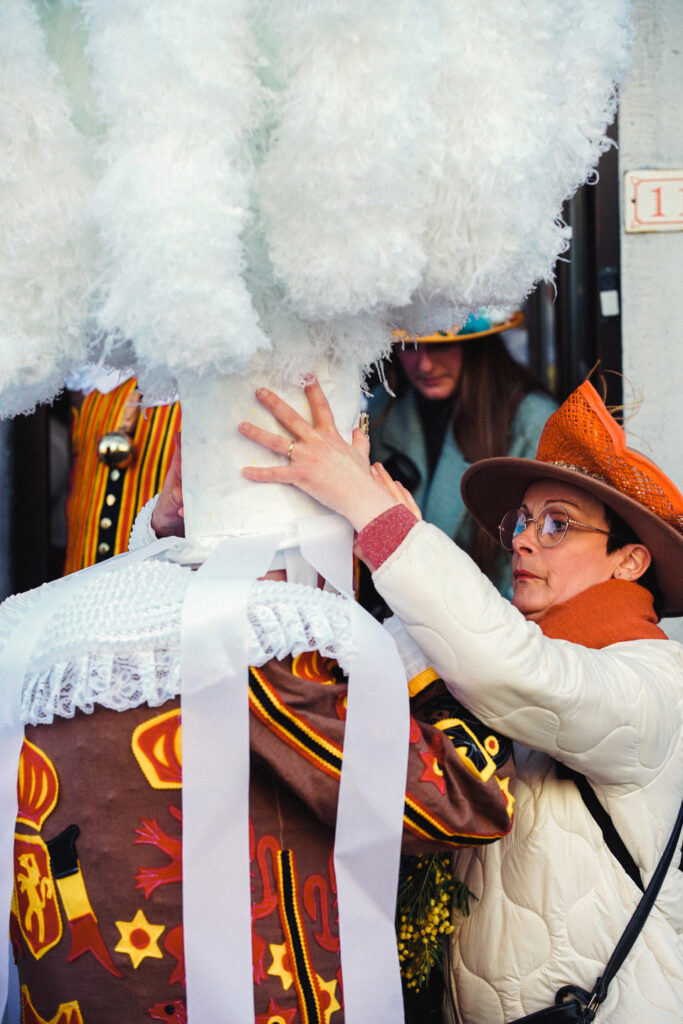

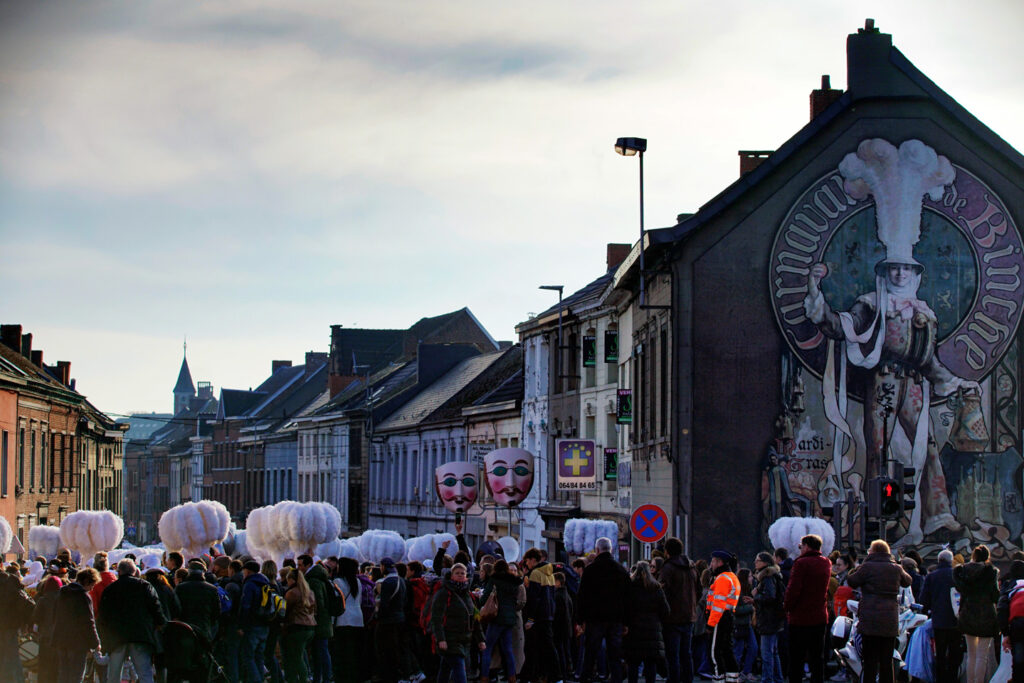
Once they reach the Grand-Place and no brotherhoods remain to arrive, the Gilles remove their straw humps and burn them all in a giant bonfire in the square. This marks the end of the Gilles’ “mandatory” route. From then on, in an almost trance-like rhythm, with bonfires lit throughout the city, they gradually withdraw until the last of them returns home—still, of course, with their drum beating behind them. A unique experience.